

At its heart, this mindset begins with a simple but transformative reframe: I can relate to my experience differently. Not control everything. Not eliminate discomfort. Not perfect myself. But relate differently. That difference in relating changes everything.
From Identification to Observation
One of the foundational elements of the self-coaching mindset is the move from identification to observation. In everyday life, it is easy to become fused with your thoughts and feelings. If a thought arises—“I’m not good enough”—it can feel like a statement of fact. If anxiety appears, it can feel like a command to withdraw. In this fused state, there is little room to maneuver.
The self-coaching mindset gently inserts distance. You begin to notice: “I’m having the thought that I’m not good enough.” “I’m feeling anxious right now.” This may sound like a small linguistic shift, but it creates psychological space. In that space, you are no longer identical with the experience; you are in relationship to it. And relationship allows for choice.
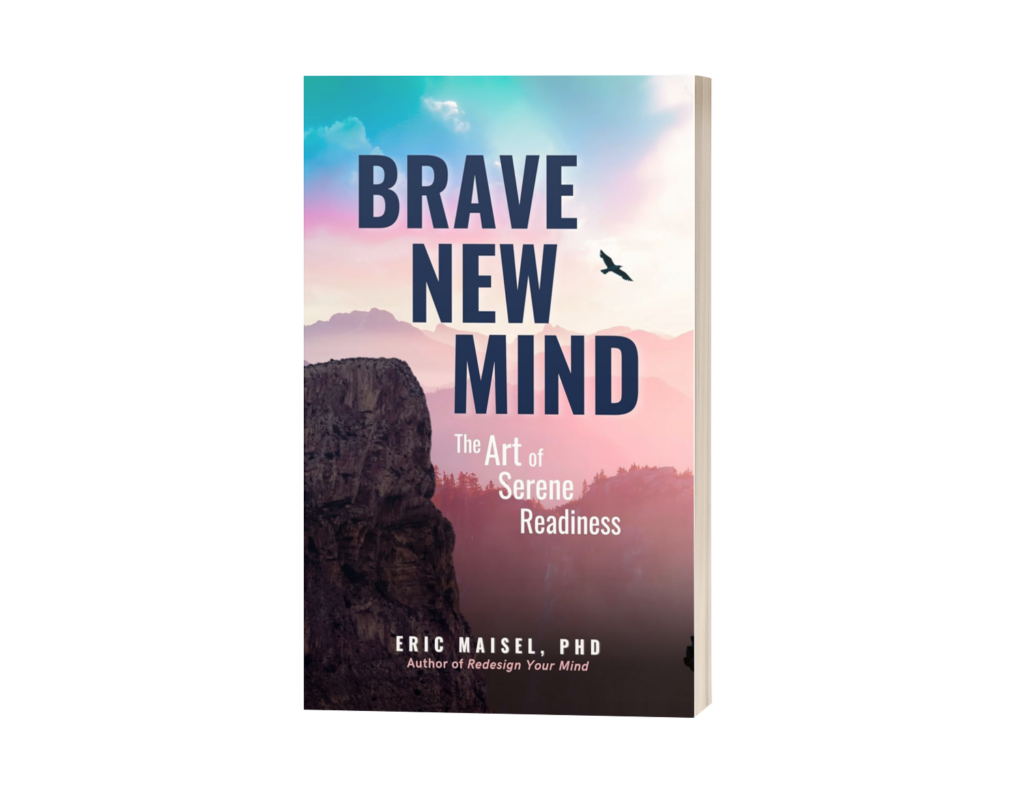
This is an excerpt from a Substack post shared by Eric Maisel, author of Brave New Mind. You can read more from Eric here.
You can keep up with Eric Maisel on Instagram, LinkedIn, and Twitter.